
The Capitol’s Symbolic Architecture
The Lost SymbolThis flow traces Langdon’s readings of the Capitol’s art and layout as a public record of America’s contested relationship with esoteric symbolism.
increasing Bearing strength in each event
 decreasing
Bearing strength in each eventdecreasingA Masonic Foundation
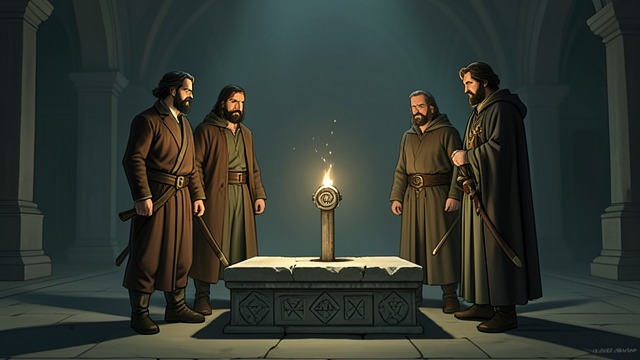
A City Designed in Symbols
Founding Ritual
Langdon recalls that the Capitol’s cornerstone was laid in a Masonic ceremony and that the city’s founders used classical and Masonic forms in public architecture.
Public Visibility
The symbols are not necessarily secret messages or proof of conspiracy. Their presence instead shows how early civic design could express a mixture of political, scientific, and spiritual ideals.
A Rotunda of Many Gods
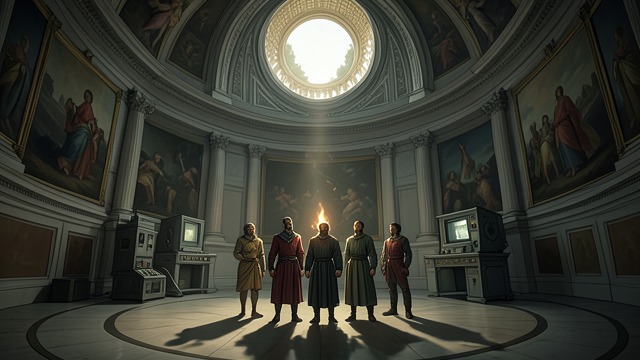
A Civic Pantheon
Classical References
Langdon points to the Capitol Rotunda’s circular design, its historical central opening, and its echoes of ancient temples such as the Temple of Vesta.
Competing Inheritances
The building’s imagery complicates claims that American public space reflects only one religious tradition. The Rotunda becomes a visible arena where classical, civic, and Christian meanings overlap.
Washington Made Divine
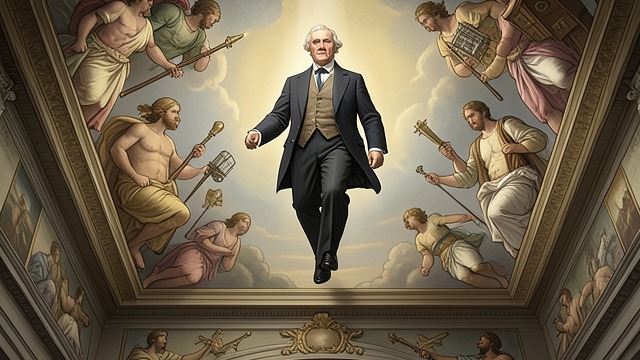
Apotheosis Overhead
A Ceiling Image
Langdon directs attention to The Apotheosis of Washington, where George Washington is shown ascending among classical gods and figures associated with invention.
Knowledge as Power
The fresco presents technological achievement as near-divine from an earlier historical viewpoint. Its presence supports the novel’s question about whether progress changes humanity’s understanding of the sacred.
A Pyramid in the Public Seal
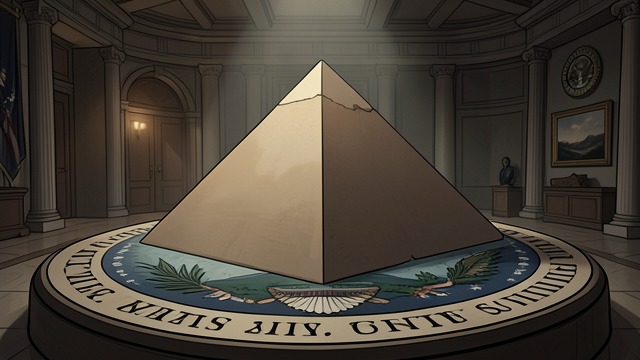
A National Emblem
The Unfinished Form
Langdon connects the pyramid legend to the unfinished pyramid on the Great Seal of the United States, whose hovering capstone suggests a task not yet complete.
Promise Rather Than Proof
The emblem does not prove that a hidden pyramid exists. It offers a durable image of aspiration, collective responsibility, and the possibility of continued human development.
The Capitol as a Map
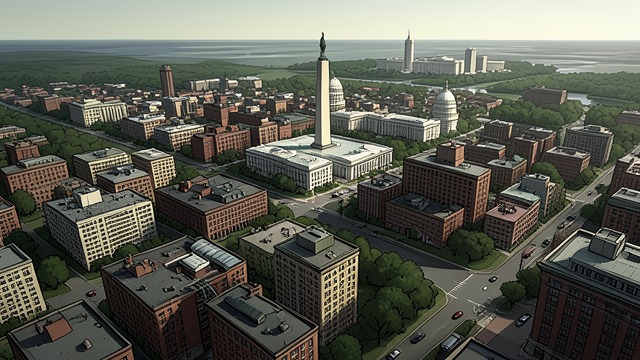
A City Read from Above
Cardinal Directions
From the Washington Monument and the Capitol’s heights, Langdon sees how the city’s landmarks align with broad directional axes and symbolic references.
Perspective Changes Meaning
The architecture does not yield a single hidden doctrine. It invites multiple readings, and the final revelation depends on changing vantage point rather than uncovering a new physical structure.
As Langdon approaches the Capitol for his supposed lecture
After Sato asks why the Rotunda matters
During the investigation beneath the Rotunda
During the discussion of the Masonic Pyramid legend
Near the ending, when Peter explains the monument’s alignment
